Digitized Audiovisual Treasures from UCSF Archives Accessible Online

Today we would like to officially inaugurate the UCSF Archives and Special Collections audiovisual collection on the Internet Archive.

UCSF has been participating in the California Audiovisual Preservation Program (CAVPP) since its inception in 2010. This innovative program that received funding from the California State Library, the National Endowment for the Humanities (NEH) and the Institute of Museum and Library Services (IMLS) partners with diverse archives, museums and libraries from around the state to provide “digitization and access services for historic California audiovisual recordings.” The goal of the project is to save the rapidly deteriorating California audiovisual heritage: the majority of the cultural institutions in the state have hundreds of recordings in obsolete formats and poor physical condition.
The program selects the recordings based on the following criteria:

• statewide and/or local historical significance – (ideally) featuring widely known names and events
• risk of loss due to physical condition and format obsolescence
• never published commercially– must be primary source material
• intellectual property in the public domain, held by the owning library, or secured from the rights holder, when possible

CAVPP pays for digitization of materials according to best practices and standards, copies of digital files, management of metadata, and provides public access via the California Light and Sound online collection on the Internet Archive.
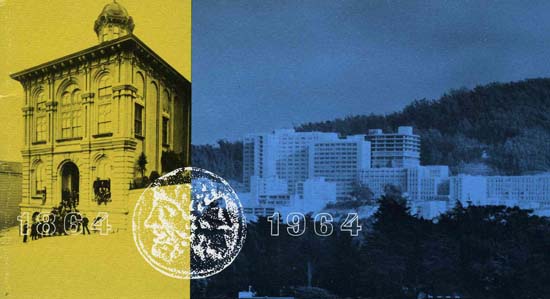
1964 School of Medicine centennial program

1964 School of Medicine centennial program

The UCSF collection includes 20 recordings with 11 more currently being digitized. Please take some time to browse these films and audio recordings documenting the development and growth of UCSF. In the next few months we will be showcasing individual items and today we would like to highlight a tape made at the centennial celebration of the School of Medicine on November 20, 1964:

This tape contains almost 4 hours of recordings including addresses and presentations by William O. Reinhardt, Dean, School of Medicine; John B. de C. M. Saunders, Chancellor; Herbert Evans; H. Glenn Bell; William Kerr; Chauncey D. Leake; Peter Forsham; J. Englebert Dunphy; Alexander R. Margulis; Ernest W. Page; Harvey M. Patt; Seymor M. Farber; Henry S. Mass; Samuel Sherman; Alexander Simon; Lloyd H. Smith. To view the centennial program that included photographs by Ansel Adams please click here.

Here is a short excerpt from William O. Reinhardt, M.D. welcome introduction:

“…What are the functions of a school of medicine? The three basic essentials must be teaching, research and community service. The neglect of any one of these spells potential failure of its role. Indeed, the more that these three phases can be melded together, the greater the accomplishment of the institution will be.
Looking back with pride we see new potentials for the future. Therefore, the Centennial Committee has planned a program in which distinguished members of the faculty will survey the past and attempt to project the necessary directions of the future.
But for its greatest usefulness a school of medicine must offer more than narrow disciplines. It must turn our leaders in the community, thoughtful individuals well versed in many fields beyond the confines of the profession itself. Therefore, the celebration of the Centennial closes with a reconsideration of the role of the humanities in the education and profession of the physician.”
Florence Nightingale Letter

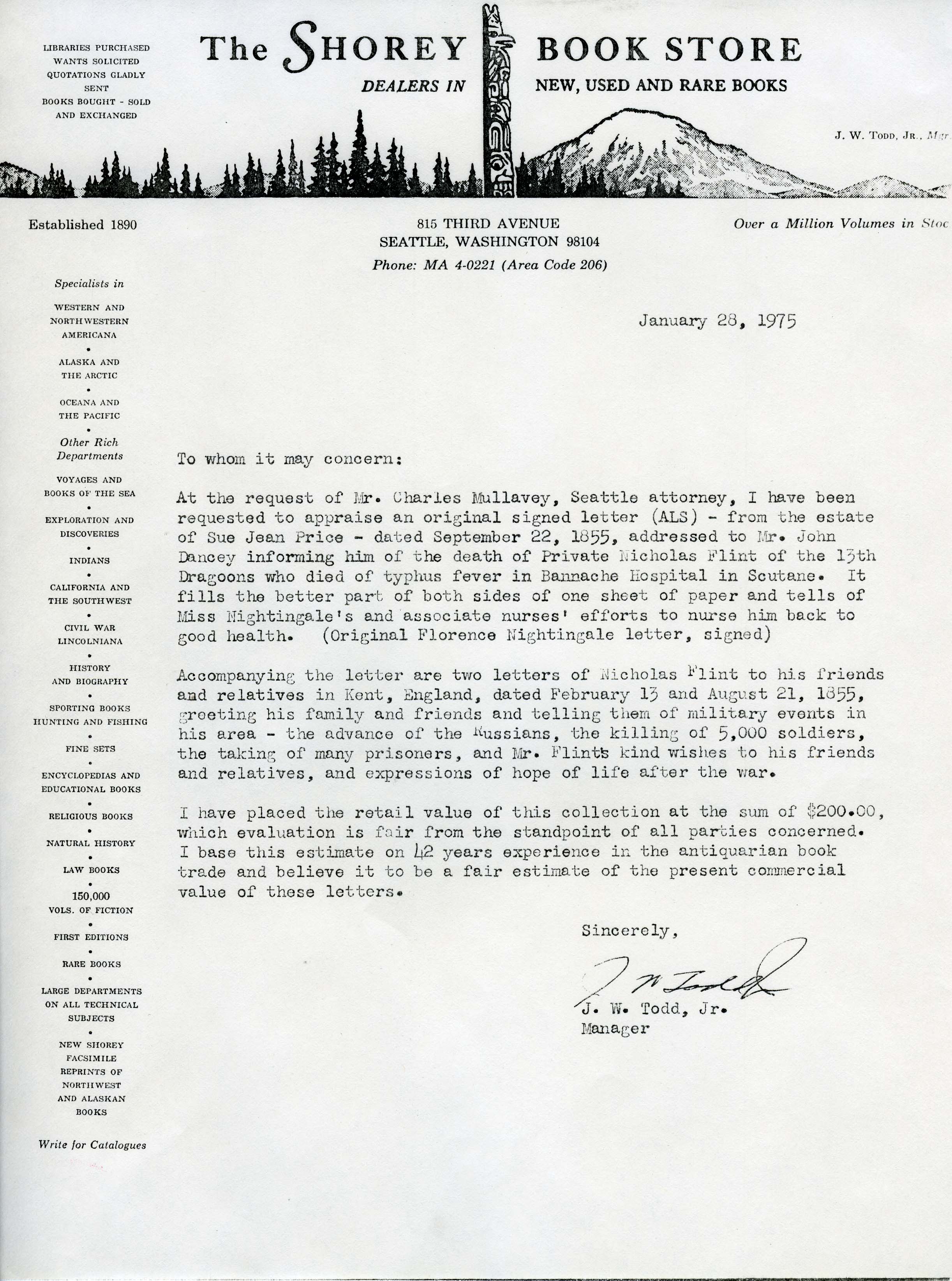
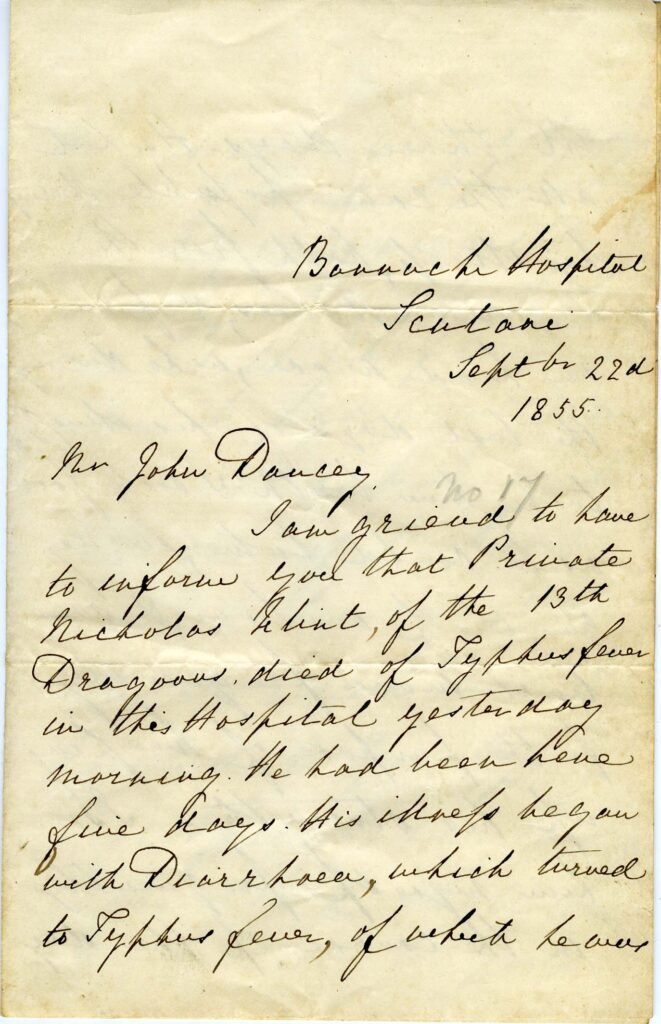
To commemorate Veterans’ Day, we bring you a letter from our collections written by Florence Nightingale in 1855 to the family of a solider who passed away in Scutari (now Üsküdar in Istanbul) during the Crimean War.  Accompanying the letter is a document that appraises the Nightingale letter and provides a bit more back story written by a rare book dealer, J. W. Todd, Jr. in 1975.

MSS 2011-20, Letter from J. W. Todd, Jr., 28 January 1975

MSS 2011-20, Letter from J. W. Todd, Jr., 28 January 1975

The Florence Nightingale letter was donated to the archives by Zina Mirsky RN, EdD in 2012.  One of her former students, Darlene Anderson had given her this letter. Early in her career, Mirsky served on active duty as a Navy Nurse and later spent over 40 years at UCSF.

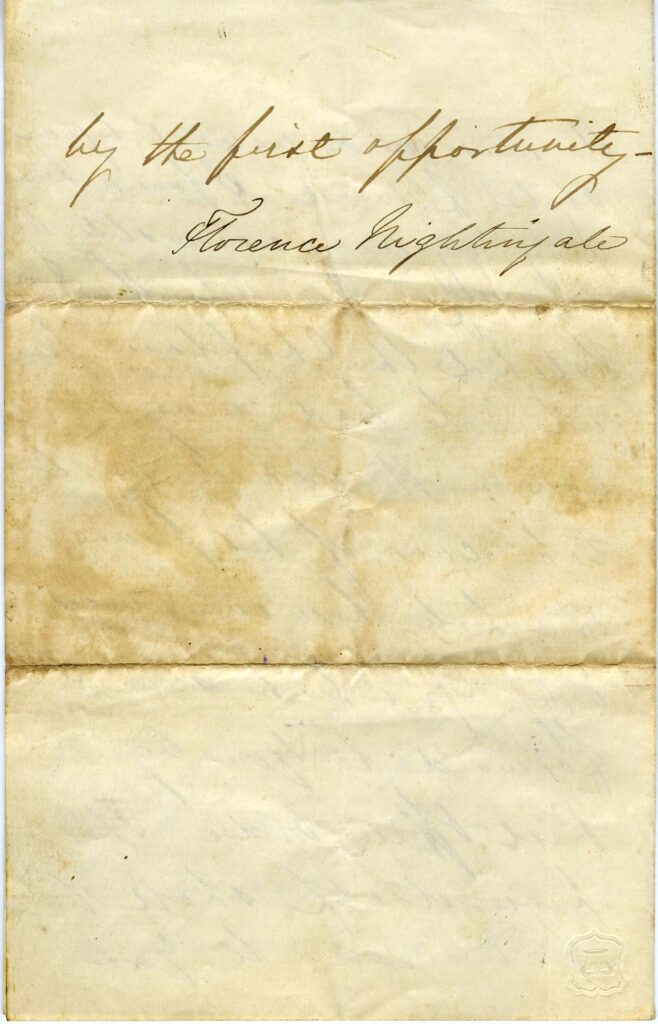
MSS 2011-20, Letter from Florence Nightingale to John Dancey, 22 September 1855

MSS 2011-20, Letter from Florence Nightingale to John Dancey, page 1, 22 September 1855

MSS 2011-20, Letter from Florence Nightingale to John Dancey, pages 2-3, 22 September 1855

MSS 2011-20, Letter from Florence Nightingale to John Dancey, pages 2-3, 22 September 1855

MSS 2011-20, Letter from Florence Nightingale to John Dancey, page 4, 22 September 1855

MSS 2011-20, Letter from Florence Nightingale to John Dancey, page 4, 22 September 1855

Prosper Alpini’s De Plantis Exoticis

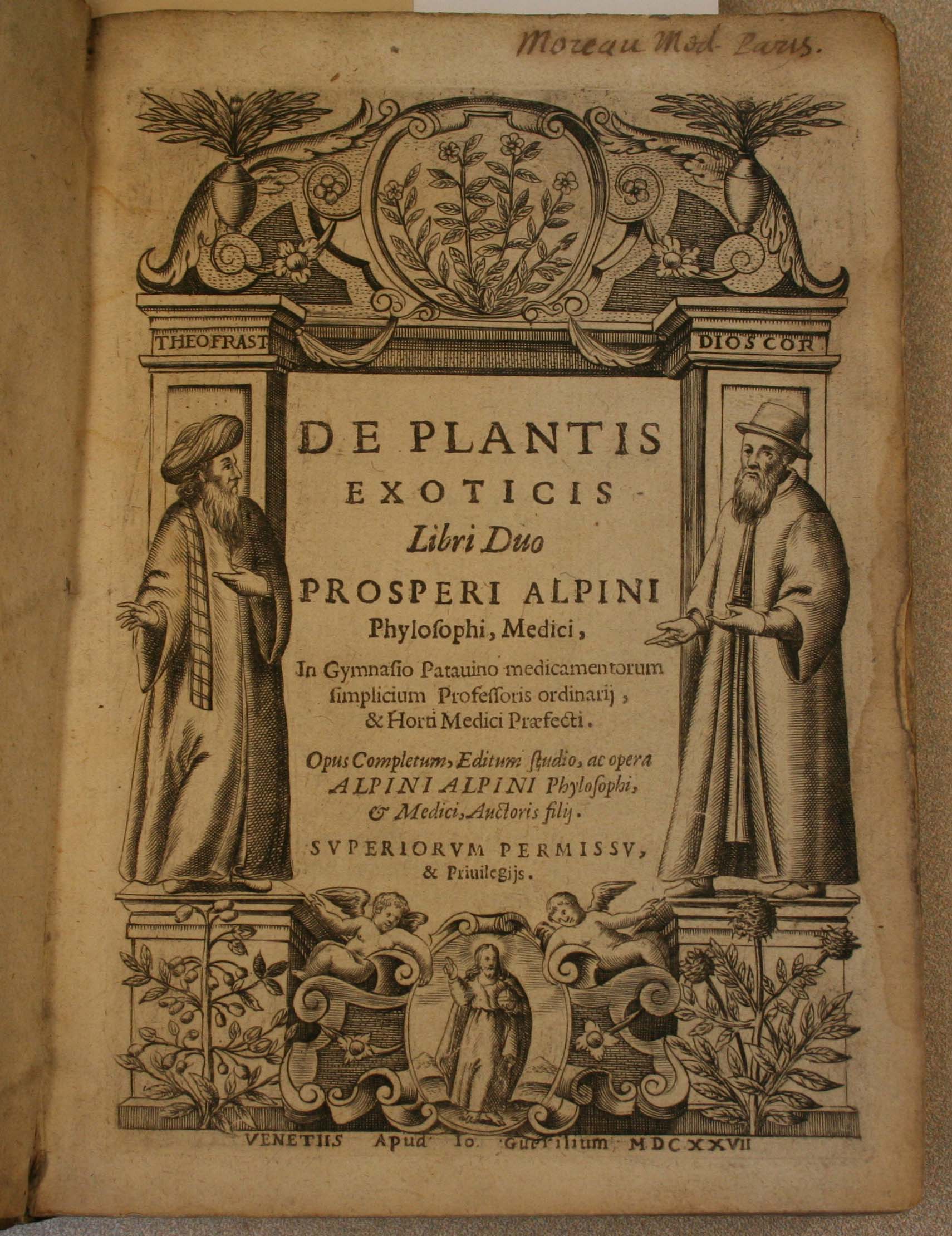
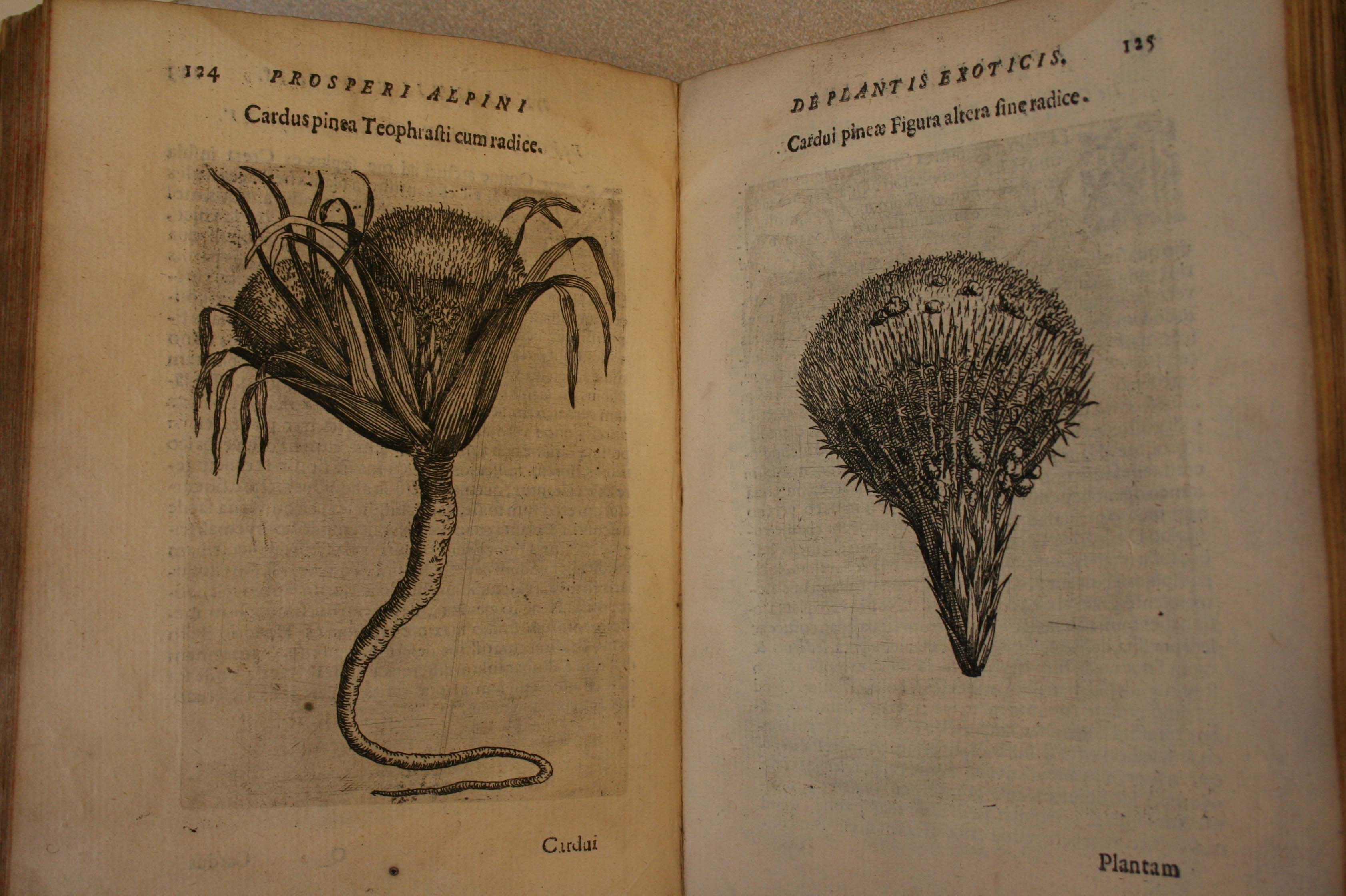
One of the many volumes in the UCSF Special Collections is a first edition of De Plantis Exoticis, written by Prosper Alpini and first published in 1627. Take a look at the engraved title page below:

Alpini, Prospero, De Plantis Exoticis

Alpini, Prosper, De Plantis Exoticis, title page

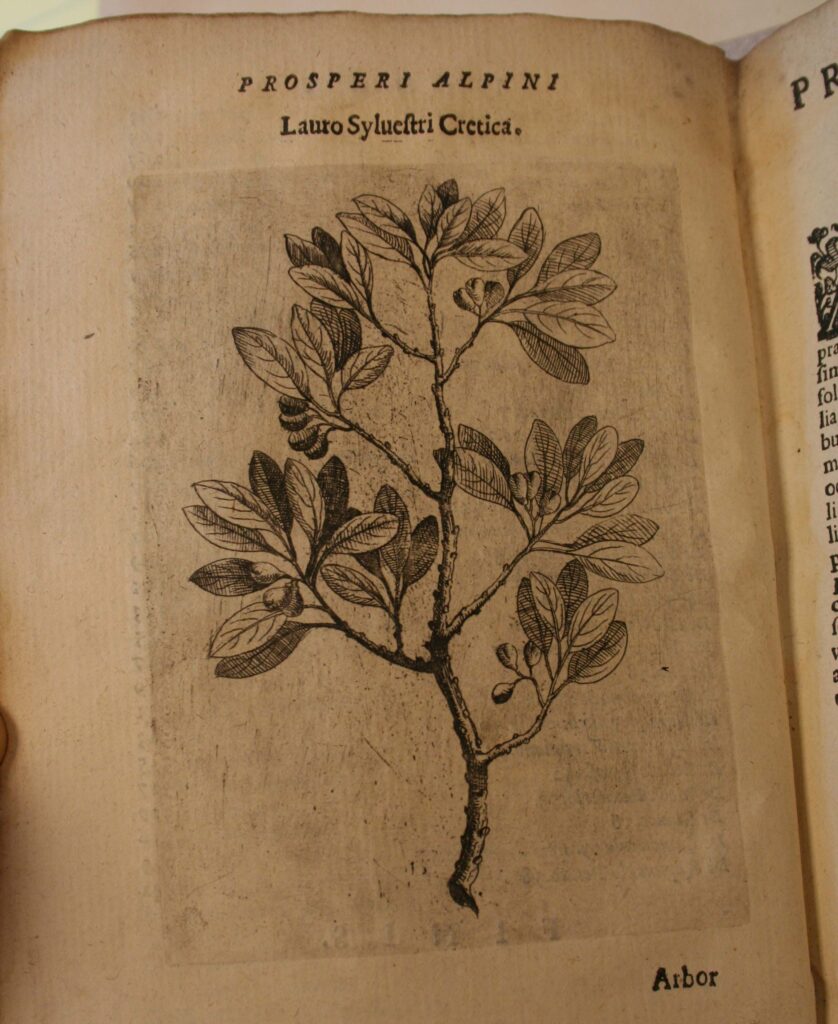
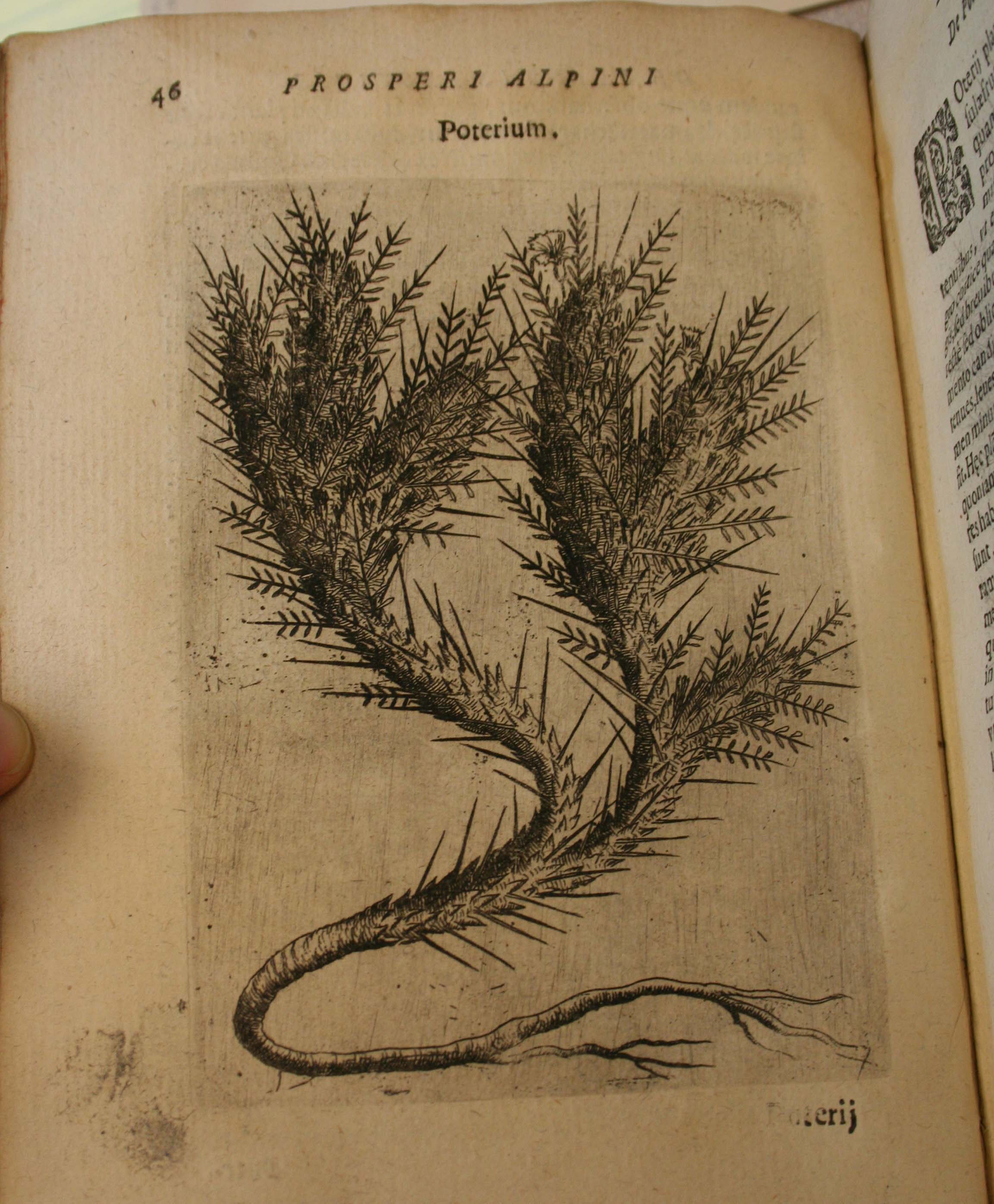
De Plantis Exoticis, edited posthumously by Aplini’s son, builds on an earlier work of the author’s, De Plantis Aegypti liber1592. Exoticis boasts 145 beautiful, full-page engravings of plants, comprising nearly half of the entire volume.

Alpini, Prosper, De Plantis Exoticis

Alpini, Prosper, De Plantis Exoticis

Alpini was born in the Republic of Venice in 1553 and died at the age of 63 in 1617. During his career he was a personal physician and a professor of botany at Padua. Alpini was the first to publish descriptions of many plants that were unknown to other botanists at the time. Much of this information was gathered during his travels to Crete, other Greek islands, and Egypt.

Alpini, Prosper, De Plantis Exoticis, p. 46

Alpini, Prosper, De Plantis Exoticis, p. 46

Alpini, Prosper, De Plantis Exoticis, p. 12-125

Alpini, Prosper, De Plantis Exoticis, p. 124-125


New Faces in Archives

During 2013 fall semester the UCSF Archives is hosting two interns:

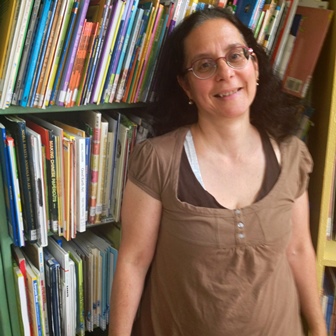
Rene Radusky, UCSF Archives intern

Rene Radusky, UCSF Archives intern

René Radusky
René is a 5th semester student at San José State University, School of Library and Information Science concentrating in Archival Studies and Records Management. She has an A.B. in Political Science from Brown University, and is making a career change after many years of working with low-income children and families in the not-for-profit sector. She also works part-time as the librarian at Escuela Bilingüe Internacional in Oakland, California. While learning archival theory and practice, René will work on processing the Tobacco Control Oral History Collection. She will also help us survey, arrange, and create an inventory for the UCSF Oral History Collection.

jesse_chairez_intern_ucsf

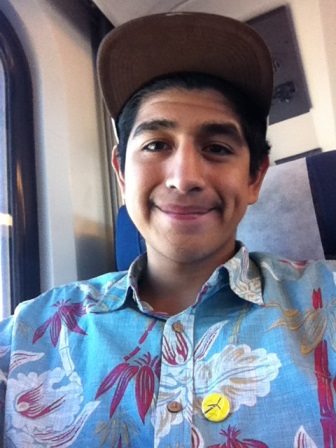
Jesse Chairez, UCSF Archives intern

Jesse Chiarez
Jesse is currently a senior at the University of San Francisco majoring in History with emphasis in Latin America and the United States. He is originally from Los Angeles and has lived there most of his life before coming to school here in the Bay Area. After he graduates from USF, Jesse is planning to apply to either medical school or a master’s program in Public Health, he still hasn’t decided. Jesse selected the UCSF Archives for his USF History Internship. This internship program is designed to be an opportunity for undergraduate history majors to learn about the many ways that history is practiced “in the real world.” Jesse will help us with several projects, including organizing University Relations audio-visual collection and preparing descriptions for the rare books identified for preservation program.

In the past year we have revived a long-standing tradition of providing a space to learn new skills and gain professional experience working in established archives to undergraduate and graduate students from the Bay Area colleges. We are excited that these two hard-working interns joined our team, please be on a look out for their dispatches from archives.

October is Archives Month

The theme of the 2013 Archives Month in California is “Working to Preserve our History.” This month-long celebration helps highlight tireless efforts by archivists, librarians, historians, volunteers, and community members to safeguard the treasures of the past for future generations.

UCSF Archives would like to invite everyone to visit the library to view two exhibits that display materials from our holdings:

  • 1st floor gallery: Japanese woodblock prints: Pharmacy and Pharmacists
  • 5th floor gallery: School of Pharmacy History: Robert L. Day Collection

If you are not able to travel you can enjoy our numerous digital collections online.

We are extending the invitation to all students, staff, faculty, researchers, and general public to make an appointment and visit the archives reading room to find out how we can help you and learn interesting facts about UCSF history.

Visit the California Archives Month website to learn about state-wide events and view images that were submitted by diverse repositories, including UCSF Archives, for this year’s poster that celebrates California’s workers and California archives’ ability to preserve labor history.

UCSF Cornerstone, 1897

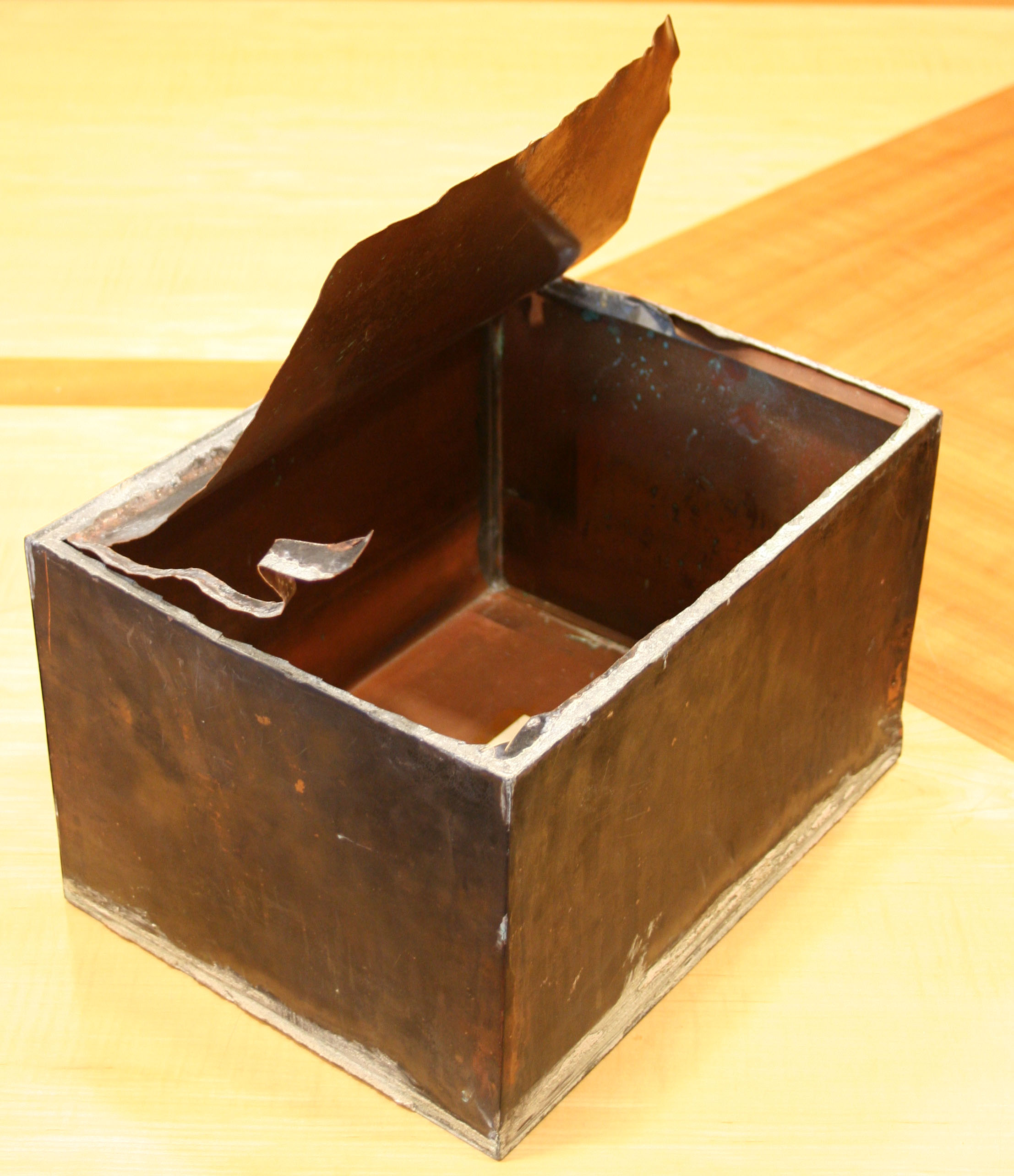
This somewhat rusty, old, copper box is a significant piece of UCSF history. It’s the cornerstone of the first medical school building on the UCSF Parnassus campus.

Cornerstone of the first medical school building on the UCSF Parnassus campus

UCSF Cornerstone, 1897

The “Old Medical School Building” was completed in 1898 and torn down in the spring of 1967. The building was originally erected to both provide more room for and consolidate the dispersed campus of the Affiliated Colleges onto Parnassus Avenue. (Briefly, the Affiliated Colleges were part of the University of California and refer to the Schools of Pharmacy, Medicine, and Dentistry– later known as UCSF.) This new site, overlooking Golden Gate Park where the Parnassus campus of UCSF still is today, was donated by the mayor of San Francisco, Alfred Sutro, in 1895.

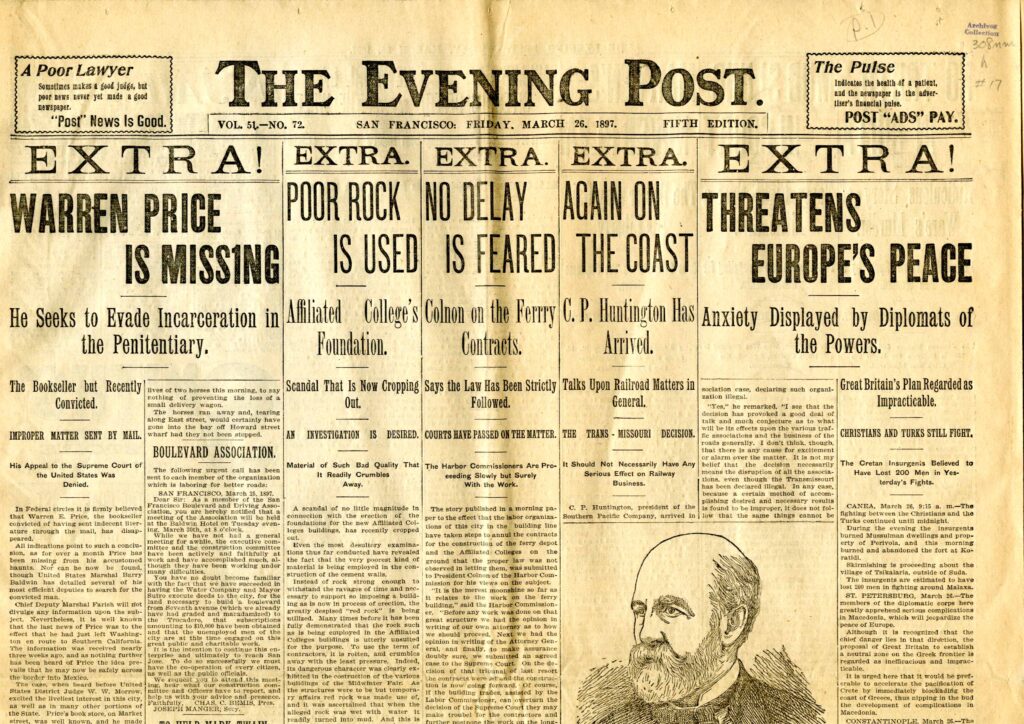
The cornerstone of the medical school, laid on March 27, 1897, was comprised of a copper box which functioned as a time capsule.  The box was unearthed and cut open in March of 1967 when the building was torn down. Inside the box were well preserved San Francisco newspapers, a copy of the site deed donated by Adolph Sutro, photos of the Affiliated College Buildings, and University announcements of the establishment of the schools of medicine, pharmacy, dentistry, and law.

The Evening Post, March 26, 1897

The Evening Post, March 26, 1897

Continue reading

Rotating Art Program and Portraits in the Reading Room

Here at the Archives & Special Collections we have, in addition to papers, books, and artifacts, a collection of works of art. This collection is widely unknown on campus due to our limited ability to showcase the pieces. However, this anonymity will come to an end with our new rotating art program. Through this initiative, we will be displaying different pieces of art on the walls of our reading room and changing them approximately every three months.

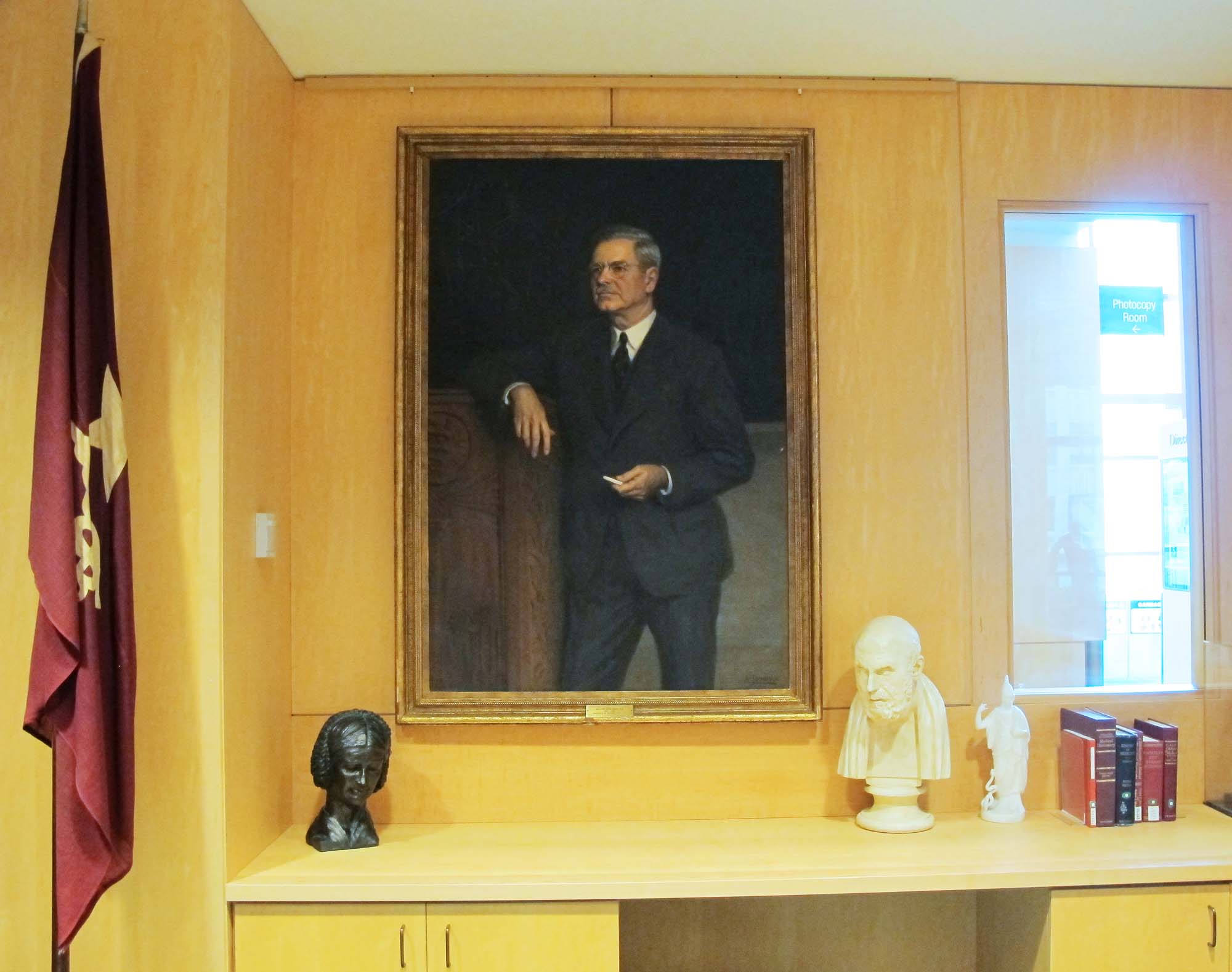
The inaugural works are two portraits of people significant to UCSF’s history– John Bertrand deCusance Morant Saunders, M.D. and William John Kerr, M.D.

William John Kerr, M.D. Alfred Jonniaux (Belgian, 1882-1974) 1949

William John Kerr, M.D.
Alfred Jonniaux (Belgian, 1882-1974)
1949

Continue reading

Robert L. Day Collection: Anatomy of an Archival Project – Part 4

Bob Day: An Oral History

When Robert (Bob) Day retired from UCSF in 2012, his legacy could be measured not only in the number of years of service, students taught, and jokes cracked but also in pounds, volume, and linear feet. Readers of this blog know from recent posts that Bob Day was an inveterate collector of material related to the history of pharmacy in general and the UCSF School of Pharmacy in particular, and the material he accumulated over his 50 years with the university was donated to the UCSF Library’s Archives and Special Collections. The materials processed by archivists totaled 40 linear feet, over 45 boxes, and an untold number of individual items. You might be asking yourself, what does all of this material tell us? What is its significance? And what kind of person would be compelled to collect all of these items?

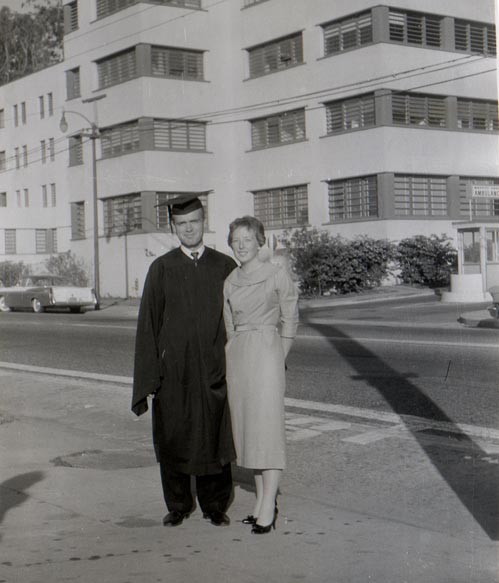
Robert Day and wife Dorothy, UCSF School of Pharmacy Commencement, 1958.

Robert Day and wife Dorothy, UCSF School of Pharmacy Commencement, 1958.

All of those questions were asked – and many of them answered – in a long, detailed, interesting, and rollicking oral history interview I conducted with Bob in the first three months of 2013. In partnership with the UCSF School of Pharmacy and the UCSF Library’s Archives and Special Collections, the Regional Oral History Office of the Bancroft Library at UC Berkeley planned and conducted this interview. In all, a little over 12 hours of interviews were committed to videotape, which were then transcribed, edited, and, now, made available to you here: http://digitalassets.lib.berkeley.edu/roho/ucb/text/day_bob_public.pdf.

What transpired in those dozen hours? Continue reading

Robert L. Day Collection: Anatomy of an Archival Project – Part 3

Conservation treatment of a portrait of William M. Searby

William Martin Searby (1835-1909) was an important figure in the founding of the California College of Pharmacy (later UCSF School of Pharmacy). In addition to being the school’s first professor of Materia Medica, and later professor of pharmacy, he was also dean of the college for many of the school’s early years.

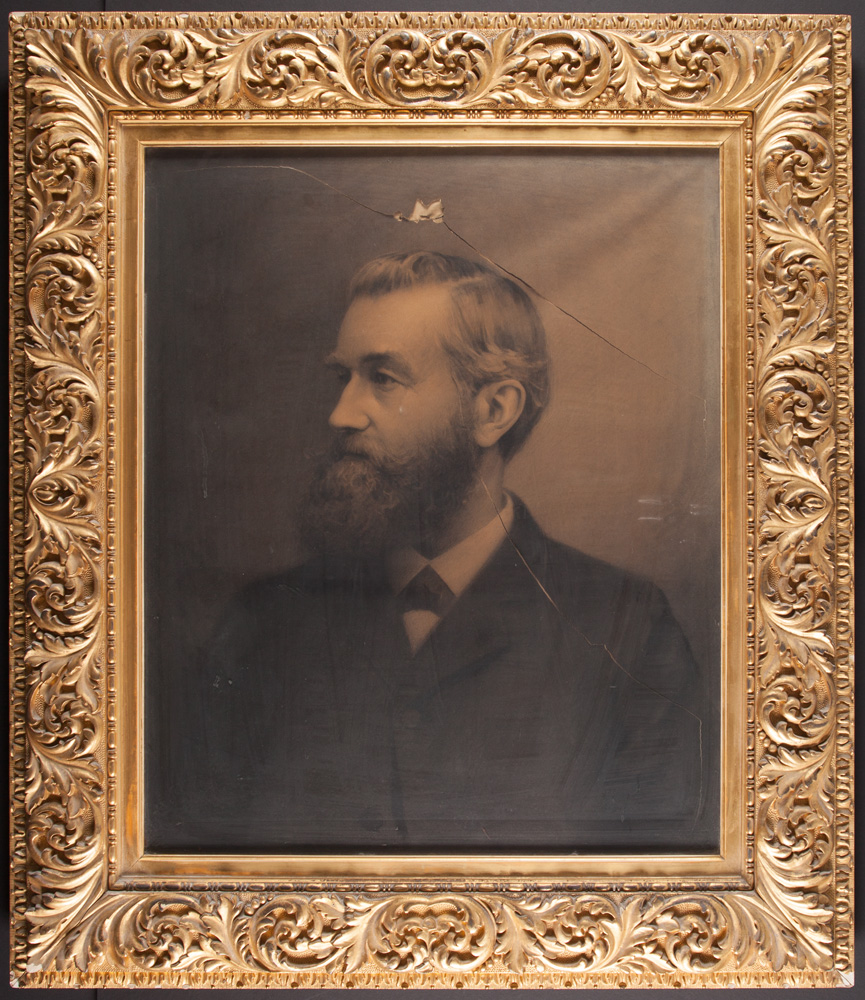
William Martin Searby (1835-1909), crayon enlargement. Portrait before treatment.

William Martin Searby (1835-1909), crayon enlargement. Portrait before treatment.

A portrait of Professor Searby in the UCSF archives, taken perhaps in the 1880s, was found in disrepair. The portrait was done in a format known as a crayon enlargement, which is a photographic image enlarged onto paper and enhanced by painting over in various media including airbrush, watercolor, or charcoal. Crayon enlargements were introduced in the late 1850s with the introduction of the solar enlarger—a means for enlarging negatives using the sun. They continued to be popular into the early 20th century and can be found on the walls of your local antique shop, often in large numbers. They can be oval shaped and mounted onto convex boards and placed in oval frames, or like the Searby portrait they can be lined with fabric and then mounted onto a wooden strainer. The Searby portrait had a silver-based photographic image as its base and was worked over primarily with charcoal. It was still housed in its original 5” Florentine gilded frame, but the portrait had suffered over time due to light exposure, variations in relative humidity, a poor-quality paper support, and the wooden strainer. These led to losses, yellowing of the image, embrittlement of the paper, and large tears.

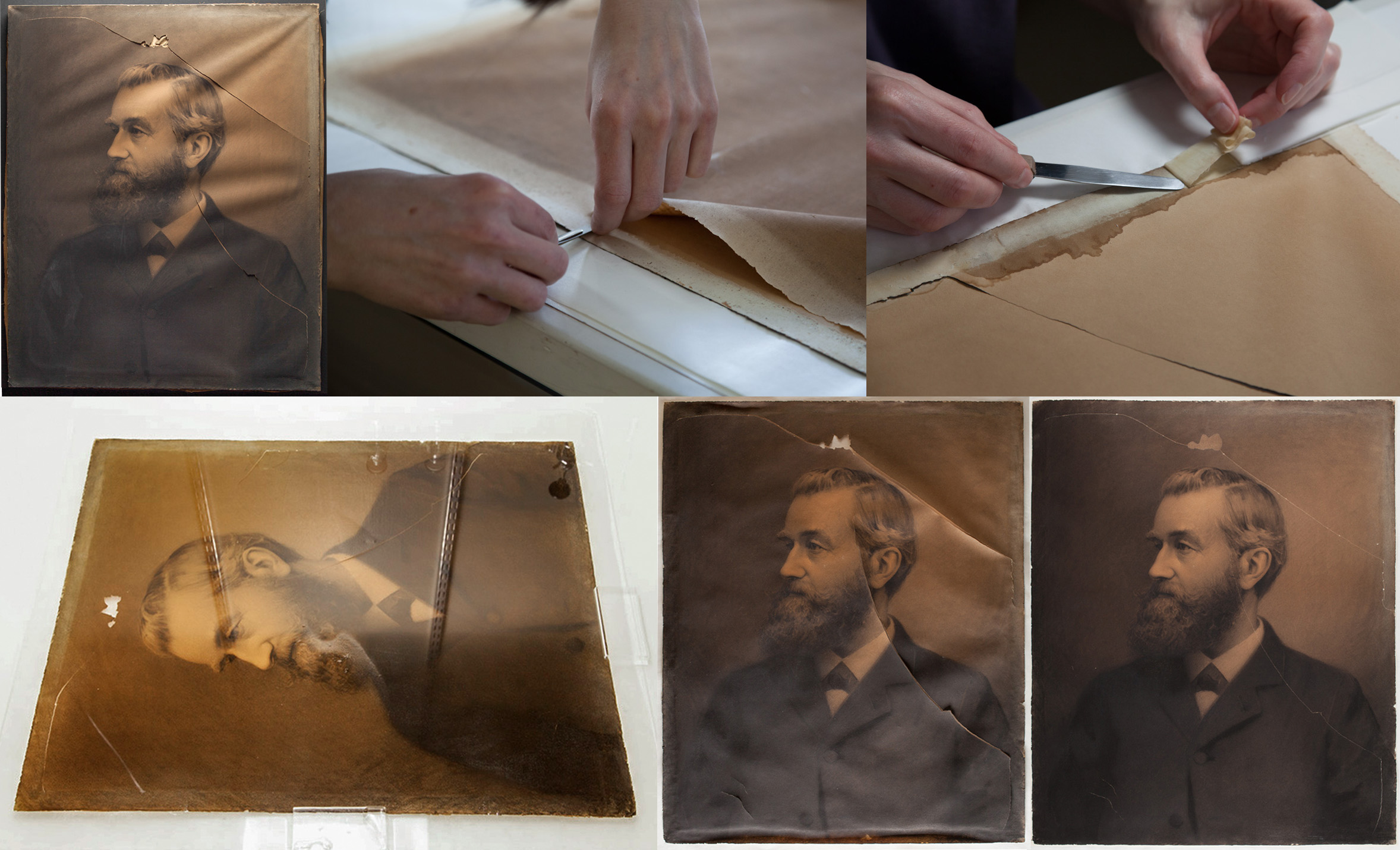
Searby portrait before and during treatment.

Searby portrait during treatment.

The portrait was brought to the photograph conservators at Gawain Weaver Art Conservation in San Anselmo, CA. The first step was to unframe the portrait and cut it away from the wooden strainer and then remove its fabric lining. The loose areas of the lining fabric were cut away with a surgical scalpel. However, the lining fabric was strongly adhered to the fragile print along the edges with a very stubborn adhesive. An enzyme poultice was used to weaken the starch component of the adhesive, but it was still very difficult to remove and had to be slowly mechanically separated after softening with enzymes. The print was then free from its support but the paper was still very brittle, yellowed, and in multiple pieces. The next step was to wash the paper to remove degradation products and restore some flexibility to the print and to light bleach the print to remove the overall yellowing and discoloration.

Light bleaching uses the free radicals generated by light interacting with water molecules to gently remove staining and discoloration in a print while it is being washed. Light bleaching was developed in Marin County by pioneering paper conservator Keiko Keyes in the early 1980s and since that time has been widely adopted by both paper and photograph conservators.

The pieces of the print were placed on a support and washed and light bleached until the discoloration was sufficiently removed and some flexibility had been restored. The fragile print needed mending and physical support, so these were accomplished together by lining the print with a thin and strong sheet of Japanese paper attached with wheat starch paste, the most stable and commonly used adhesive in the conservation of photographs and works on paper. The mended cracks and remaining losses were then filled and retouched to make them all but invisible to the viewer.

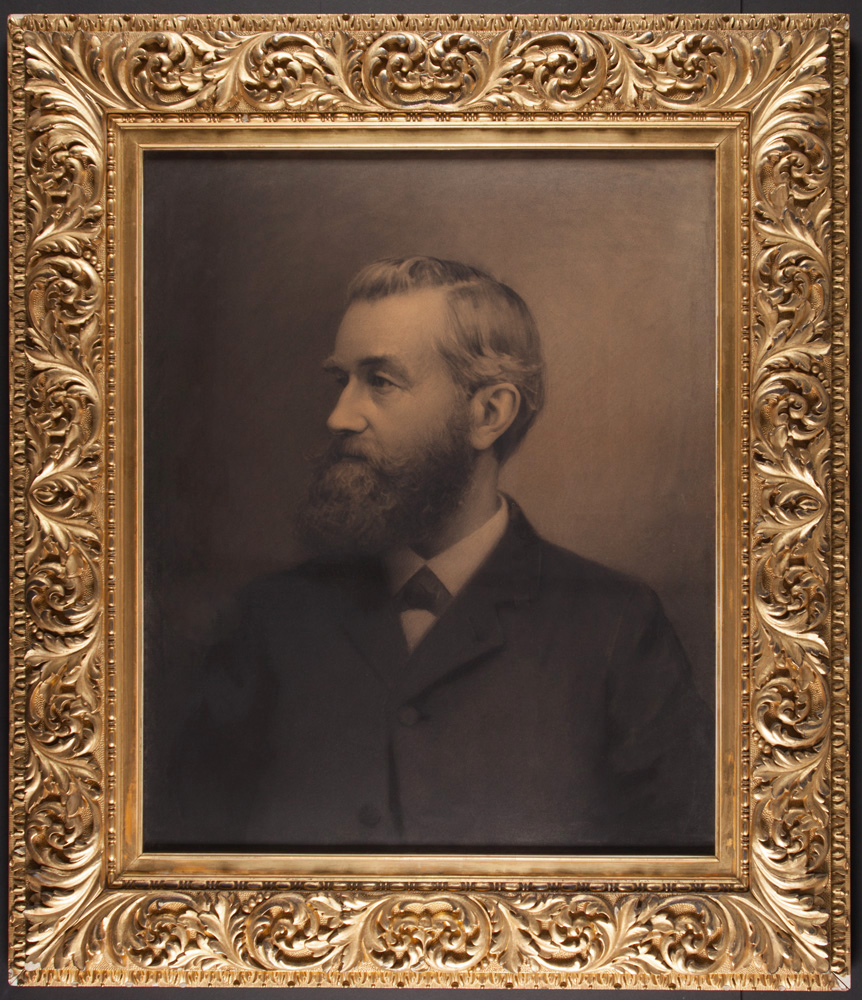
William Martin Searby (1835-1909),crayon enlargement.Portrait before treatment.

Searby portrait after treatment.

The original aesthetic of the portrait was perfectly flat. To achieve that flatness and to provide further physical support, the newly lined print was mounted overall to a sheet of 4-ply rag museum board. The glass was replaced with UV-filtering acrylic to eliminate the danger of breaking glass and provide protection from ultraviolet light. The old nails keeping the two parts of the frame together were dangerous and often very loose, so they were removed and the frame and print were assembled more securely to be put on display for the first time in many years outside the UCSF archives.

Gawain Weaver
Photograph Conservator
Gawain Weaver Art Conservation
http://gawainweaver.com/