UCSF’s 150th Anniversary

Earlier this year the UCSF Chancellor Susan Desmond-Hellman, MD, MPH sent out a message to the campus community announcing key events that will be organized to mark the 150th anniversary of the founding of UC San Francisco. The UCSF’s sesquicentennial celebration will start this year with the Founders Day events in April and continue through May 2015. Additional details can be found on the website that was developed for the 150th anniversary.

UCSF Anniversary Logo

UCSF Anniversary Logo

For the past several months the archives staff has been working on several projects that document and bring to life the rich history of UCSF. Our stories about these projects will be accompanied by the UCSF Anniversary Logo, and today we are publishing the first installment from these series.

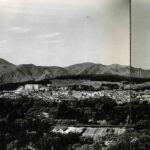
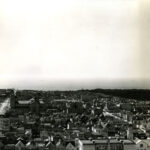
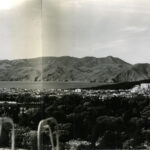
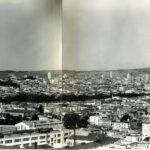
Historic Panoramic Photograph of San Francisco, circa 1933-1935

Use our slideshow below to view this beautiful panoramic photograph of San Francisco taken in the 1930s from the Parnassus campus of UCSF. The photograph is comprised of ten discrete photographs taped together to form an almost seamless panoramic image measuring 4.5″ x 54″ looking north and spanning west to east.

Click on a thumbnail to enlarge the images and see the slideshow.

Unfortunately, the photograph lacks accompanying information about its creation, however, several significant qualities have helped us to narrow down the date. Most significantly, in the second portion of the close-ups, on the right side, the unfinished Golden Gate Bridge is visible. The pylons closest to San Francisco can be seen, but not the suspension cables which, according to the Golden Gate Bridge Construction Timeline, puts the image somewhere in 1933-1935.

Other things of note include the presence of the original Kezar Stadium (former home of the SF 49ers and Oakland Raiders), the absence of the Bay Bridge (which was also under construction from 1933-1936), and the generally bare Presidio area.

What strikes you most about the photo? Let us know! We’d love to hear your insights into the old San Francisco landscape.


New Additions to the Eric Berne Collections

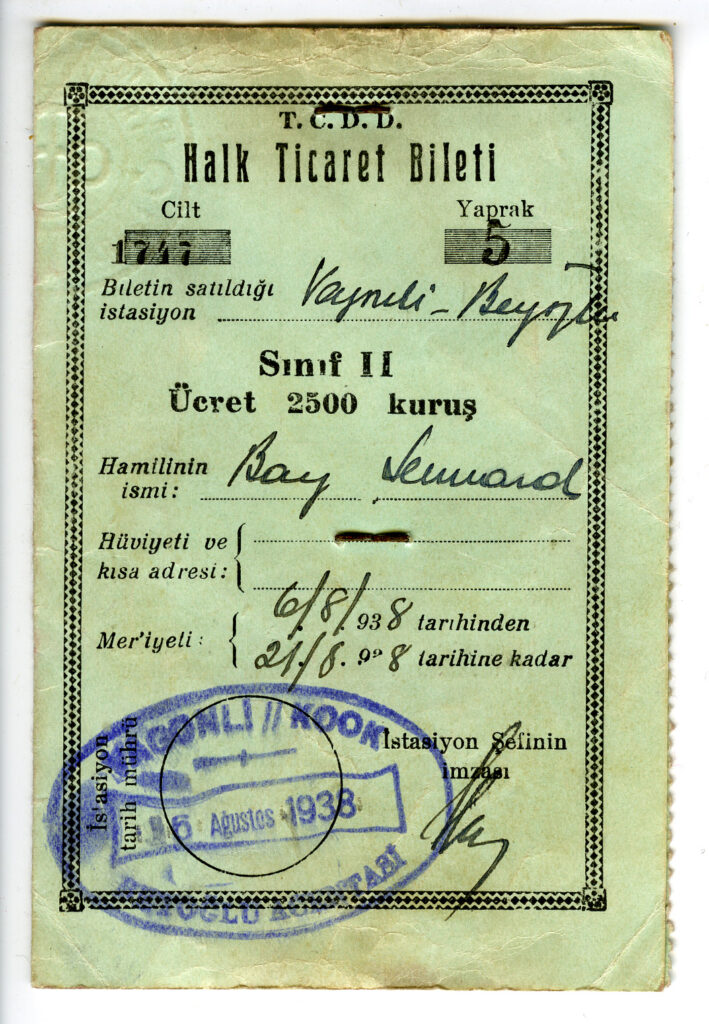
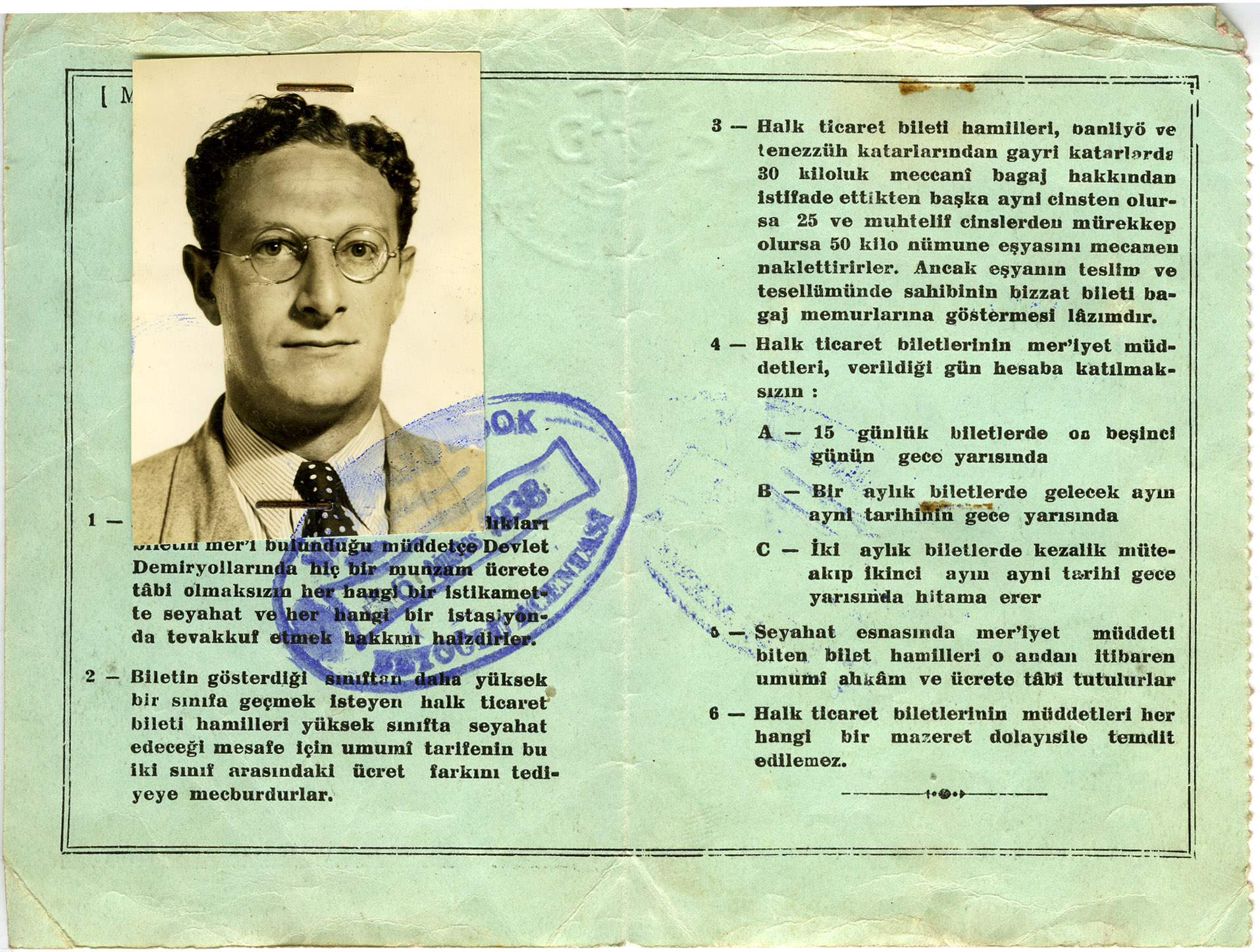
The Eric L. Berne Collection grew by another 8.5 linear feet a few weeks ago, when additional records arrived at Special Collections. The International Transactional Analysis Association (ITAA) and the Berne family have generously placed a large collection of Eric Berne’s early papers and educational records on deposit with UCSF for public research and use. The ITAA has also donated a collection of audio recordings of Berne’s Transactional Analysis lectures and of San Francisco Social Psychiatry Seminar meetings (1963-1970). This new accession in particular documents Berne’s medical school education at McGill University in Montreal and his early career as a psychiatrist. It also includes more of his professional and creative writings in several languages, and contains fascinating ephemera from his frequent research trips around the world.

Berne's ticket to travel in Turkey, 1938

Berne’s ticket to travel in Turkey, 1938

Photograph page of Berne's ticket to travel in Turkey, 1938

Photograph page of Berne’s ticket to travel in Turkey, 1938

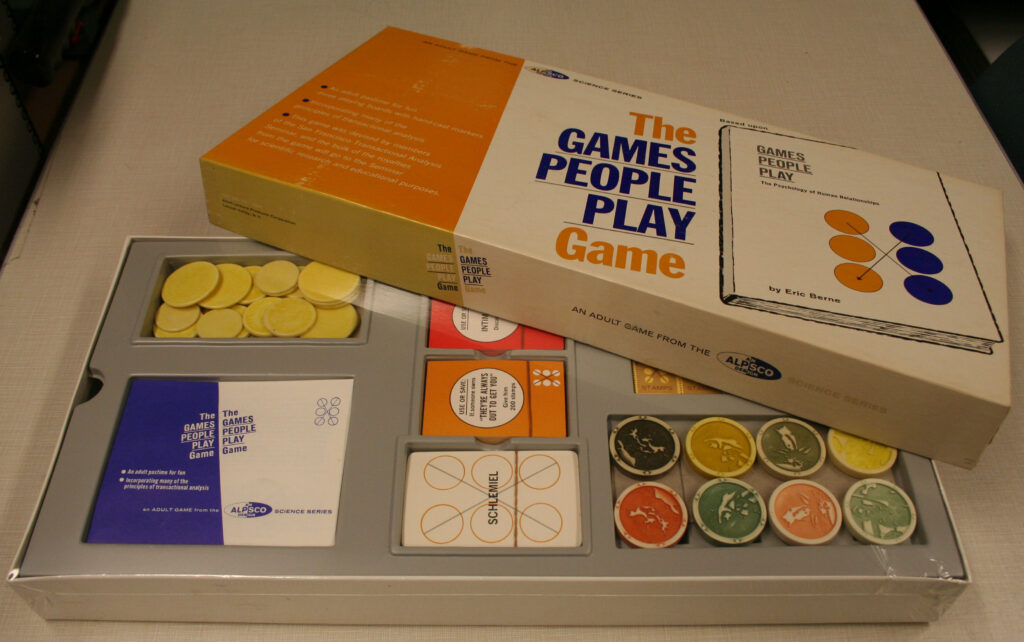
Three-dimensional objects are represented as well, such as an original version of the board game based on Berne’s bestselling book Games People Play.

Board game based on Berne's bestselling book "Games People Play"

This collection will be processed in the next several weeks and linked to other rich materials in the related Berne collections. Online finding aids to these materials are coming soon.


UCSF Archives Acquires Laurie Garrett Papers

Laurie Garrett, Pulitzer Prize-winning science journalist and researcher, recently donated her papers to the UCSF Archives and Special Collections. Ms. Garrett is the only writer to have been awarded all three of the Big “Ps” of journalism: the Peabody, the Polk, and the Pulitzer.
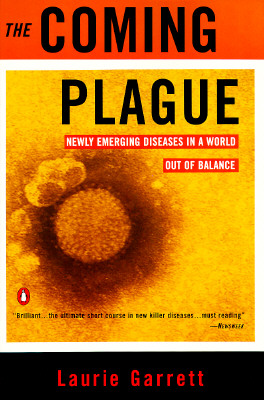
The-Coming-PlagueMs. Garrett is the best-selling author of The Coming Plague: Newly Emerging Diseases in a World Out of Balance (1994) and Betrayal of Trust: The Collapse of Global Public Health (2000). Her latest book is I Heard the Sirens Scream: How Americans Responded to the 9/11 and Anthrax Attacks (2011). She graduated with honors in biology from the University of California, Santa Cruz, attended graduate school in the Department of Bacteriology and Immunology at the University of California, Berkeley, and did laboratory research at Stanford University with Dr. Leonard Herzenberg. During her PhD studies, Ms. Garrett started reporting on science news at KPFA, a local radio station. This hobby soon became far more interesting than graduate school, and she took a leave of absence to explore journalism. In 1980, she joined National Public Radio, working out of the network’s bureaus in San Francisco and, later, Los Angeles as a science correspondent. In 1988, Ms. Garrett left NPR to join the science writing staff of Newsday. Her Newsday reporting has earned several awards: Award of Excellence from the National Association of Black Journalists (for “AIDS in Africa,” 1989), First Place from the Society of Silurians (for “Breast Cancer,” 1994), and the Bob Considine Award of the Overseas Press Club of America (for “AIDS in India,” 1995). Since 2004, Laurie Garrett has been a senior fellow for global health at the Council on Foreign Relations in New York. Ms. Garrett was awarded doctorates Honoris Causa by three universities: Illinois Wesleyan University, the University of Massachusetts Lowell, and Georgetown University.

The Laurie Garrett papers consist predominantly of the research files used by Ms. Garrett in the writing of her two books, The Coming Plague and Betrayal of Trust. They contain numerous drafts and published newspaper and magazine articles, including her Pulitzer Prize-winning 1996 series printed in Newsday, chronicling the Ebola virus outbreak in Zaire. Also included are a series of 25 articles, “Crumbled Empire, Shattered Health,” on the AIDS epidemic and public health crisis in the former Soviet Union that received the George Polk Award for Foreign Reporting in 1997. This collection encompasses a wealth of primary resources consisting of correspondence, interviews, photographs, and ephemera, including HIV/AIDS-related posters from around the world. A sizable part of the collection includes research materials, interviews and notebooks (that will be transferred to the archives at a later date) from the time when Laurie Garrett was a science correspondent for NPR, Newsday, and wrote for the Washington Post and the Los Angeles Times, among many other publications.

These papers also contain secondary source materials such as complete publishing runs of AIDS Weekly, AIDS Newsletter, and AIDS Treatment News, scholarly papers, conference abstracts, reports, and promotional materials.

This sizable collection consisting of more than 150 linear feet spans from the mid-1970s to 2013. It documents a broad array of subjects related to global health, newly emerging and re-emerging diseases –primarily the HIV/AIDS epidemic, SARS, avian flu, Ebola, Anthrax, and influenza – and their effects on foreign policy, national security, and bio-terrorism.
LaurieGarrett_ucsf

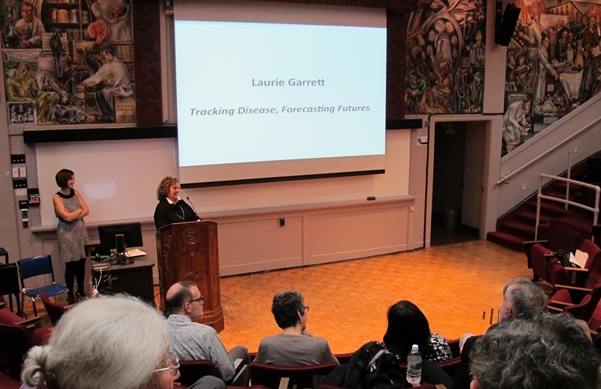
Laurie Garrett gave a lecture at Toland Hall on UCSF campus on February 21, 2014

The Laurie Garrett papers are a major acquisition for the UCSF archives and it will enhance several existing areas of collecting, in particular history of HIV/AIDS epidemic, infectious and chronic diseases, and global and public health. UCSF is considered one of the preeminent repositories of AIDS-related materials and Ms. Garrett’s collection complements papers from the AIDS History project that began in 1987 as a joint effort of historians, archivists, AIDS activists, health care providers, and others to secure historically significant resources about the response to the AIDS crisis in San Francisco. For more than thirty years since Ms. Garrett started covering the outbreak in San Francisco (even before it became publicly known that a virus was responsible), she has been collecting materials on the evolution of the HIV pandemic. Her vast and comprehensive files contain information on many topics including the social origins and history of HIV/AIDS; HIV drugs; President Reagan’s and Clinton’s AIDS policies as well as detailed HIV/AIDS information on many different countries. Her extensive writings and files on the subject of public health mesh well with the materials from the Philip Randolph Lee and Harold S. Luft papers already preserved in the UCSF archives.

The availability of these materials for research will help advance the study and teaching of the health sciences, and allow further analysis of how medical discoveries were presented and described to a broader audience. The papers of Ms. Garrett, a gifted and internationally recognized author and investigative reporter, will serve as a source of inspiration for novice and experienced medical and science writers and journalists.

The Laurie Garrett papers were officially unveiled during the special presentation she gave at UCSF on February 21, 2014.

For more information, or if you have questions on how to access this collection, please contact Polina Ilieva: polina.ilieva@ucsf.edu.

DASHM adopts Jacob Bigelow’s American Medical Botany

We’re pleased to announce that two of our books have been adopted!

The UCSF Department of Anthropology, History, & Social Medicine has chosen to conserve American Medical Botany. Read more about the book from the perspective of Sarah Robertson, a PhD student in the department.

Additionally, the always supportive Bay Area History of Medicine Society has graciously taken De humani corporis fabrica libri septem under its wing.

UCSF Archives Lecture Series presents Laurie Garrett, February 21, 2014

Join us on Friday, February 21st as Laurie Garrett, Pulitzer Prize-winning science journalist and researcher, gives a special presentation at UCSF. This is the inaugural lecture in a new series from UCSF Archives & Special Collections.

Lecture: Tracking Disease, Forecasting Futures
Presenter: Laurie Garrett, Senior Fellow for Global Health, Council on Foreign Relations
Date: Friday, February 21, 2014
Time: 10:00 am – 11:15 am
Location: Toland Hall Auditorium (U142), University Hall, 533 Parnassus, 1st floor
This lecture is free and open to the public.

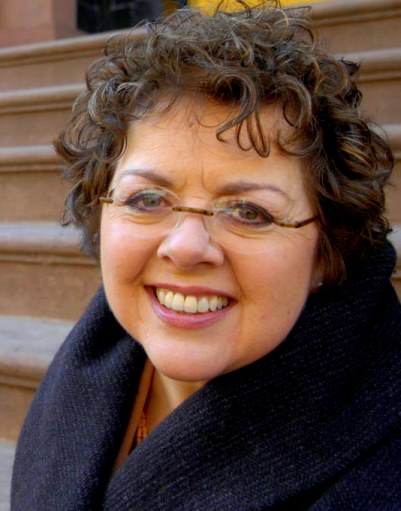
Laurie Garrett

Laurie Garrett

About Laurie Garrett
As a medical and science writer for Newsday in New York City, Laurie Garrett became the only writer ever to have been awarded all three of the Big “Ps” of journalism: The Peabody, The Polk (twice), and The Pulitzer. Laurie is also the best-selling author of The Coming Plague: Newly Emerging Diseases in a World Out of Balance and Betrayal of Trust: The Collapse of Global Public Health. In March 2004, Laurie took the position of Senior Fellow for Global Health at the Council on Foreign Relations. She is an expert on global health with a particular focus on newly emerging and re-emerging diseases; public health and their effects on foreign policy and national security. Learn more.

About the UCSF Archives & Special Collections Lecture Series
UCSF Archives & Special Collections launched this lecture series to introduce a wider community to treasures and collections from its holdings, to provide an opportunity for researchers to discuss how they use this material, and to celebrate clinicians, scientists, and health care professionals who donated their papers to the archives.

The second lecture “Remembering the first years of AIDS epidemic” is scheduled for Wednesday, April 16th  from 12 pm-1 pm at the Lange room in the Library and will feature Drs. Volberding, Cooke, Greenspan, Abrams.

UCSF on Historypin

Historypin is a website that allows users to view and post historical photos that have been digitally “pinned” to a map– thereby highlighting the location which may be unrecognizable in the photo. It allows photographs to be searched by place, time, or channel– channels are accounts that have been set up by various people and organizations.

We created our channel on Historypin– UCSF Archives & Special Collections— in part to begin celebrating the 150th anniversary of UCSF! Toland Medical College began in 1864 in the heart of San Francisco’s North Beach neighborhood, moved to the wide-open countryside of the Parnassus/Inner Sunset area, and has continued to change and grow.

We will continue to add images and information throughout the coming year. Check back often for new and interesting images of the ever-evolving UCSF campus. We encourage you to add comments or information to our pinned images!

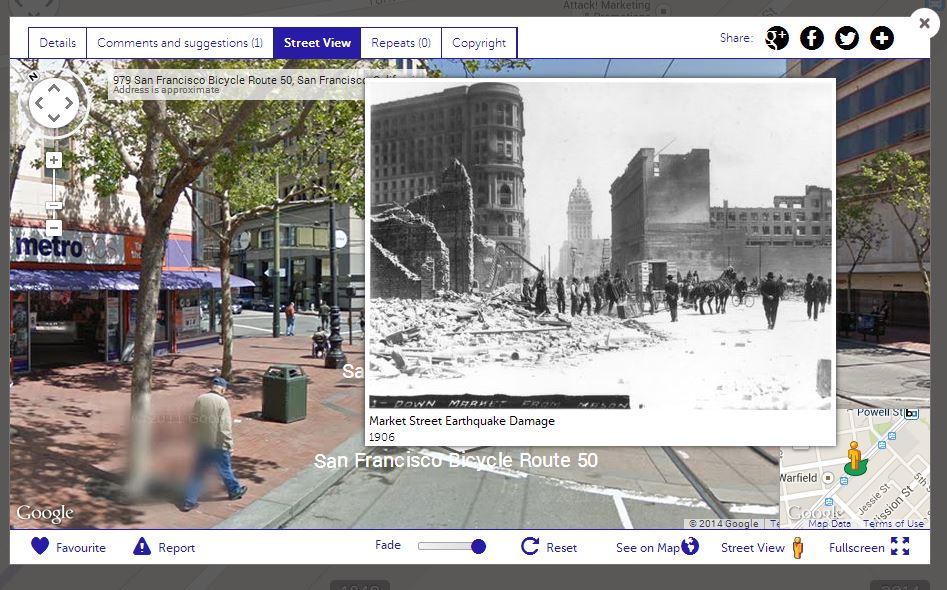
One of the niftiest features of Historypin is the ability to pin an image directly onto street view. If the photograph was taken from the street (or similar angle and location), it can be placed on the map over the Google street view image of the image’s location– just like the image of Market Street Earthquake Damage, 1906 shown below. You can toggle the fade slide bar to play with photograph’s opaqueness.

Capture

For more detailed information on the history of UCSF, please see A History of UCSF.

Adopt-a-Book: Help Us Restore and Preserve 150 Rare Books

UCSF’s Rare Book Collection contains more than 15,000 volumes, including items from the 15th century, collected over the past 150 years through donations and gifts from faculty, alumni, and friends of the Library. Over time, many books have deteriorated so that additional use would add further damage to their condition. As a busy research library, it is important that we keep these materials accessible to present and future researchers.

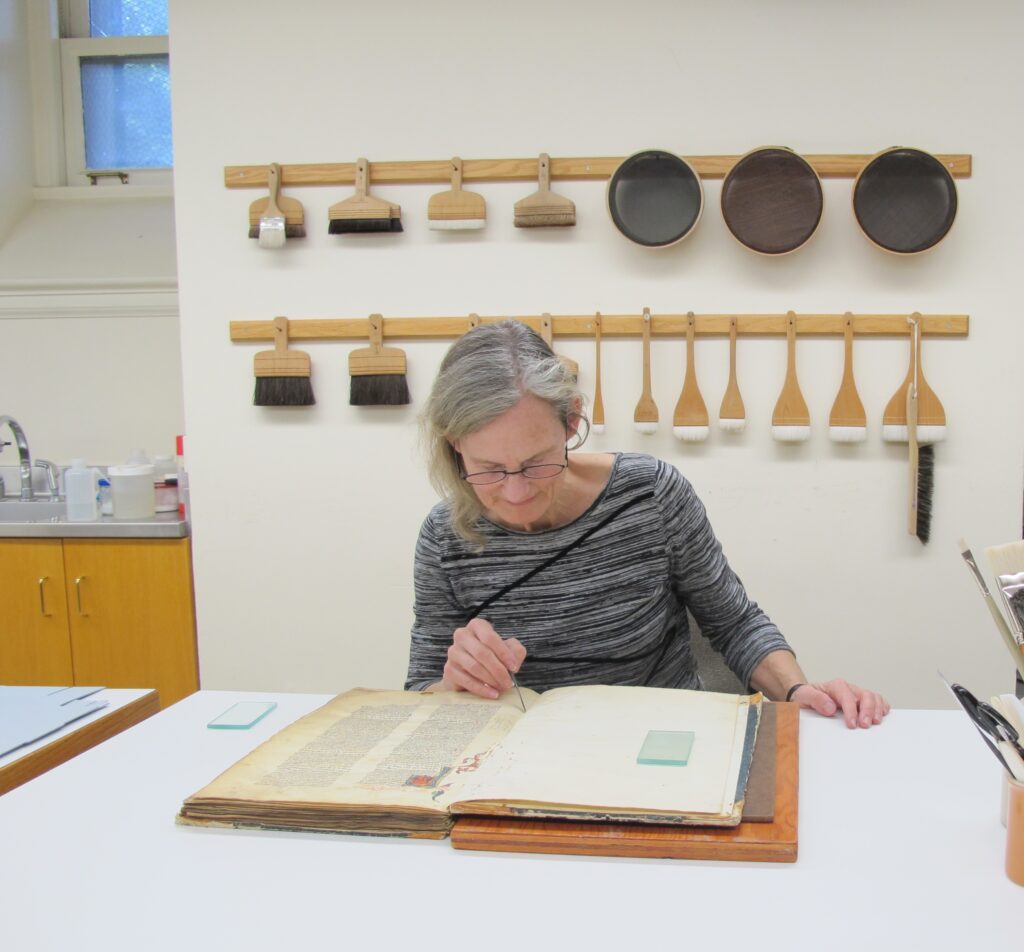
A conservator at the UC Berkeley Library conservation lab.

A conservator at the UC Berkeley Library conservation lab.

In honor of UCSF’s 150th Anniversary, UCSF Archives & Special Collections has launched the Adopt-a-Book program, which aims to fund the restoration of 150 books that were published before 1864, the year that UCSF was founded. Your generous donations will support the work of conservators that will stabilize the books and prevent future damage, in addition to paper restoration, cleaning, and some cosmetic treatment.

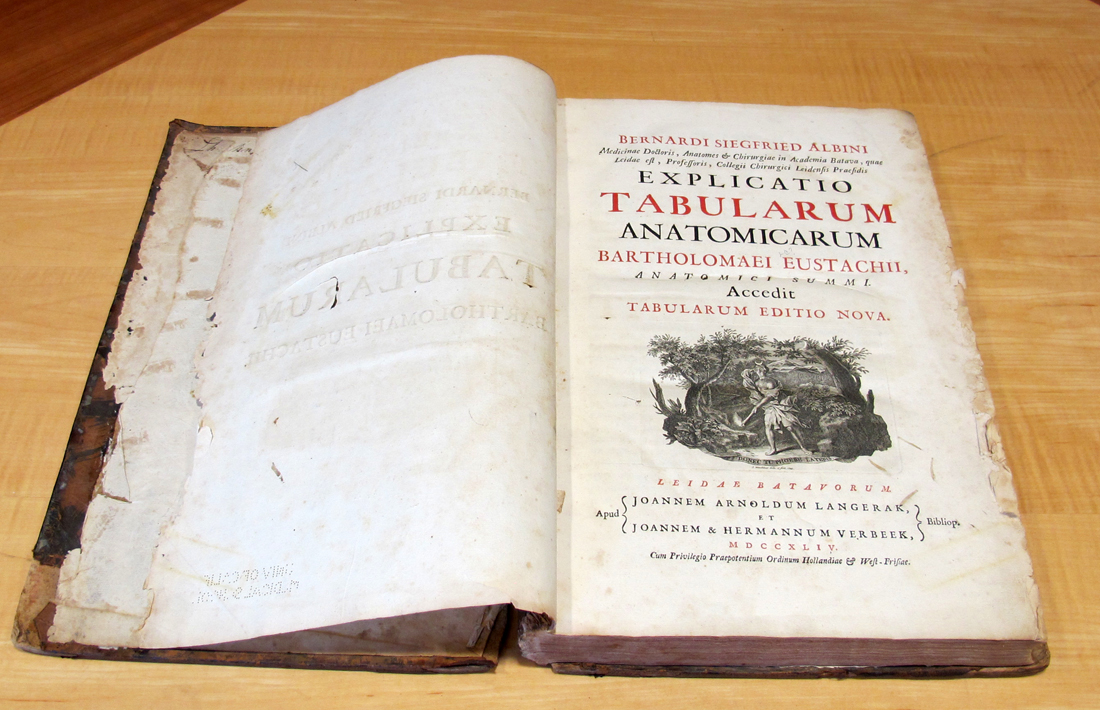
Bartolomeo Eustachi; Bernardi Siegfried Albini, Explicatio tabularum anatomicarum, 1744

Bartolomeo Eustachi; Bernardi Siegfried Albini, Explicatio tabularum anatomicarum, 1744. One of the books that is featured on the Adopt-a-Book website.

The Library is very grateful to the members of the Bay Area History of Medicine Society, who have already donated money to restore a copy of De Humani Corporis Fabrica, 2nd edition (1555), written by Andreas Vesalius.

Interested in adopting a book from this exceptional collection? Learn more about the Adopt-a-Book program. We sincerely appreciate your generosity and continued support!

Medical History at UCSF: the Department of the History of Health Sciences, 1927-1998

The Archives and Special Collections contain both administrative and teaching files from the Department of the History of Health Sciences, especially between the years 1985-1998, before it became a Program in the interdisciplinary Department of Anthropology, History and Social Sciences. The unit was originally created in 1927, but became official on January 1, 1930 as Department of Medical History and Bibliography, supplied with a special seminar and rare book room in the new library. Fueled by the Oslerian cultural ideal, the medical classics were read and quoted since many educated physicians still could read Latin fluently. Chairing these seminars was Le Roy Crummer, a notable bibliophile and veteran collector of old books, together with Dean Langley Porter and professors Herbert Evans and Chauncey Leake. These activities were meant to convey to UC Regents that the campus provided a cultural environment that would preclude the removal of the Medical School to the Berkeley campus.

During the 1930s and 1940s, the Department flourished under the leadership of John B. de C. M. Saunders, a Professor of Anatomy and University Librarian. During these decades, its stewardship of archival materials and historical collections expanded, particularly with the acquisition of a collection of Oriental medicine titles. The name of the unit changed to History of Health Sciences in 1965 to accurately reflect the interests of the entire campus, and Dr. Saunders was appointed Regents Professor of Medical History, a post he occupied until his retirement in 1973. His long tenure featured the development of a graduate program of studies leading to an M.A. and Ph.D. degrees. His successor, Gert H. Brieger, then guided the Department from 1975 to 1984, when another change in name occurred to better illustrate its humanistic mission: History and Philosophy of Health Sciences.

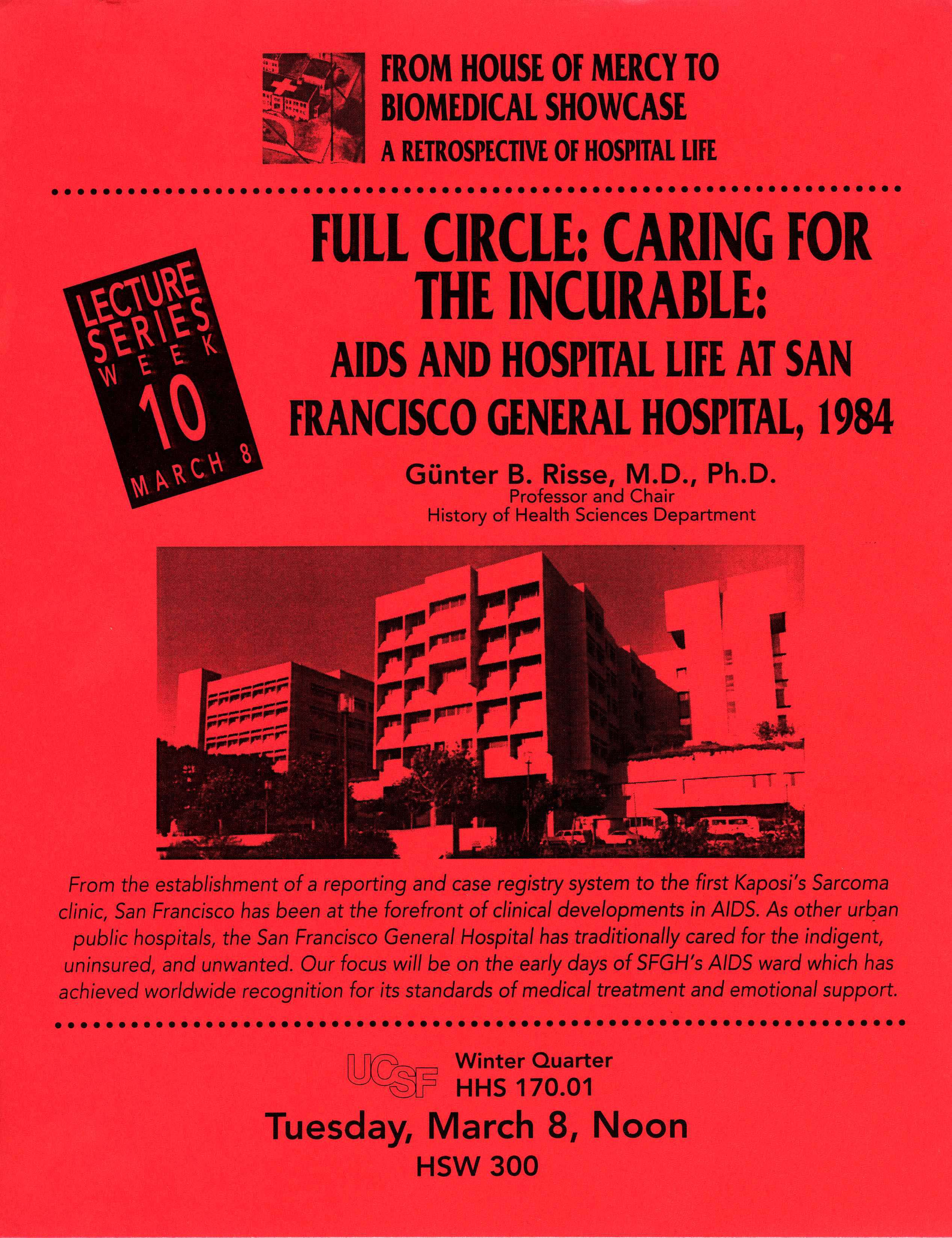
Poster for the 1994 public lecture series at UCSF entitled “From House of Mercy to Biomedical Showcase: A Retrospective of Hospital Life.”

Poster for the 1994 public lecture series at UCSF entitled “From House of Mercy to Biomedical Showcase: A Retrospective of Hospital Life.”

My appointment in 1985 allowed a resumption of the graduate program and the development of new elective courses for medical students, all supported by a library and audiovisual collection. With bioethics rapidly becoming an independent field, the designation History of Health Sciences returned. By this time, moreover, medical history was no longer the medicine’s inspirational handmaiden of its early days, but a scholarly enterprise designed to carefully reconstruct the medical past within its scientific, social, political, economic and cultural contexts. Such an outward glance, however, was complemented with an inward look at medicine itself, particularly the emotional demands of becoming and being a healer and establishing relationships with patients.

To implement such goals, the Department sponsored a program of noon-hour illustrated lectures, delivered at the Parnassus campus and open to faculty, students and staff during the 1990s. Among the most prominent themes presented with the use of slides and films were a history of the Western hospital from antiquity to AIDS and another of alternative healing traditions. In my opinion at the time, the old-fashioned lecture format was still the best way to convey the complex and contingent panorama of medicine’s impact on society. For medical students, our elective tutorials were designed to allow a guided exploration of the process of becoming a physician—emotional and technical– with the help of historical examples.

During more than half a century of its existence, many scholars played prominent roles in the Department’s development. Among them were faculty, students, health professionals, visiting lecturers and guest speakers, as well as patrons and donors who provided resources for the unit to flourish, allowing it to remain at the forefront of similar academic medico-historical institutions in the country and the world.

Guenter B. Risse MD, PhD is a historian of health and medicine. He was the chair of the Department of the History of Health Sciences at UCSF in 1985–2001. He now is Professor Emeritus, Department of Anthropology, History and Social Medicine at UCSF. His most recent book “Plague, Fear and Politics in San Francisco’s Chinatown”  was published in 2012 by Johns Hopkins University Press; it depicts the work of UCSF faculty during the epidemic.

Eric Berne Rare Book Inventory Completed

The Eric L. Berne collection includes over 300 rare books from Berne’s personal library. Published between 1829 and 1984, these volumes illustrate Berne’s study of medicine, psychology, philosophy, folklore, and therapeutic techniques, as well as his published work. The researcher will find medical textbooks from Berne’s student days at McGill University in Montreal, Canada, practical manuals from psychiatric clinics and hospitals, popular “self-help” books of the 1950s and 1960s, and weighty tomes on psychoanalysis by major thinkers like Freud, Erikson, and Federn. Many books are underlined and annotated in Berne’s handwriting.

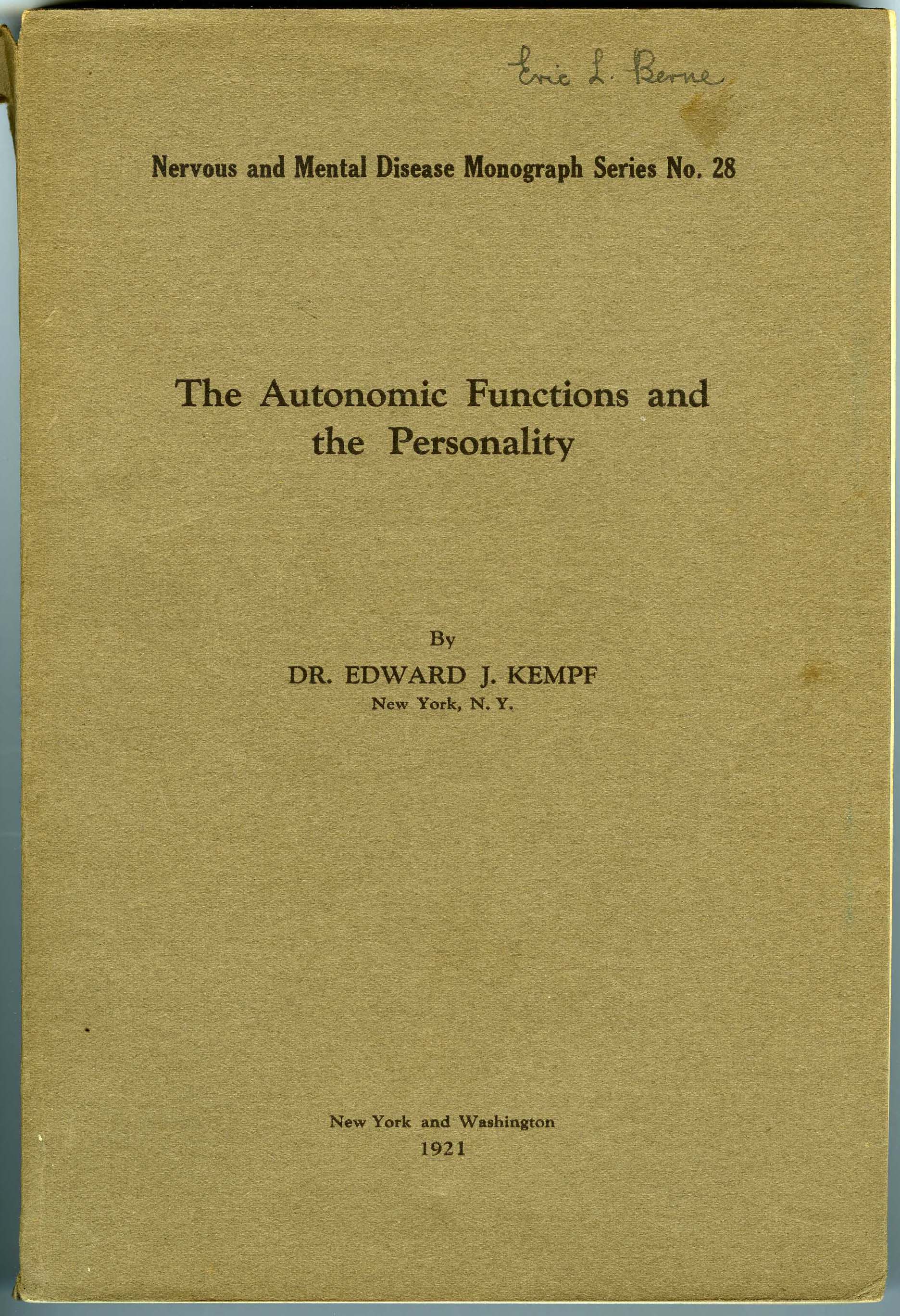
Cover of Berne's medical school textbook "The Autonomic Functions and the Personality" by Dr. Edward J. Kempf, 1921

Cover of Berne’s medical school textbook “The Autonomic Functions and the Personality” by Dr. Edward J. Kempf, 1921

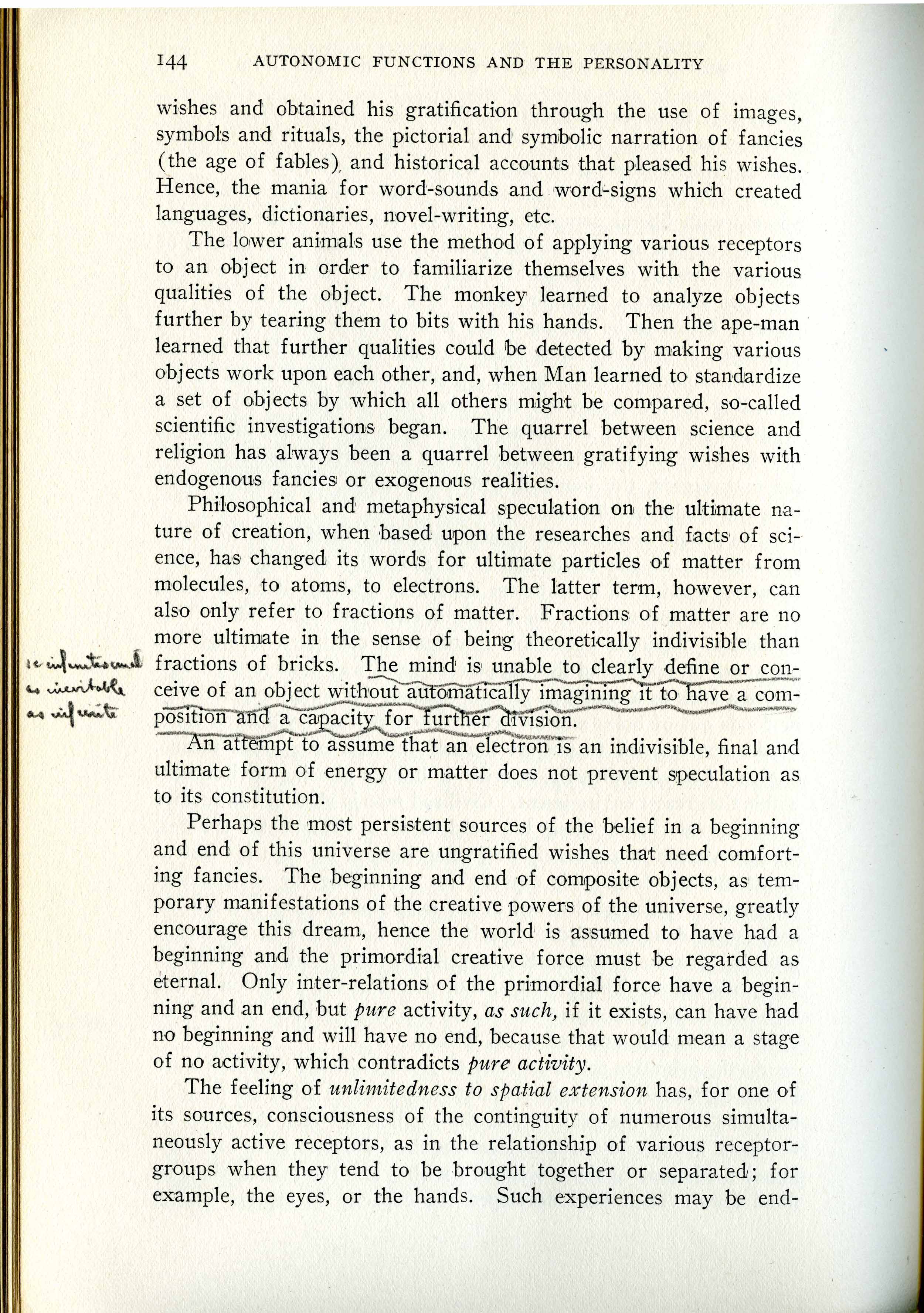
Berne's annotations in "The Autonomic Functions and the Personality"

Berne’s annotations in “The Autonomic Functions and the Personality”

The collection also includes copies of Berne’s published works. His 1964 best-seller Games People Play was translated into nearly twenty different languages, and the Italian, German, Danish, Finnish, Swedish, Hebrew, Chinese, Norwegian, and Dutch editions are represented on the shelves. Working copies and first editions of The Mind in Action, A Layman’s Guide to Psychiatry and Psychoanalysis, The Structure and Dynamics of Organizations and Groups, Principles of Group Therapy, Transactional Analysis in Psychotherapy: A Systematic Individual and Social Psychiatry, and What Do You Say After You Say Hello? are available, as well as works by other contemporary and later practitioners of Transactional Analysis.

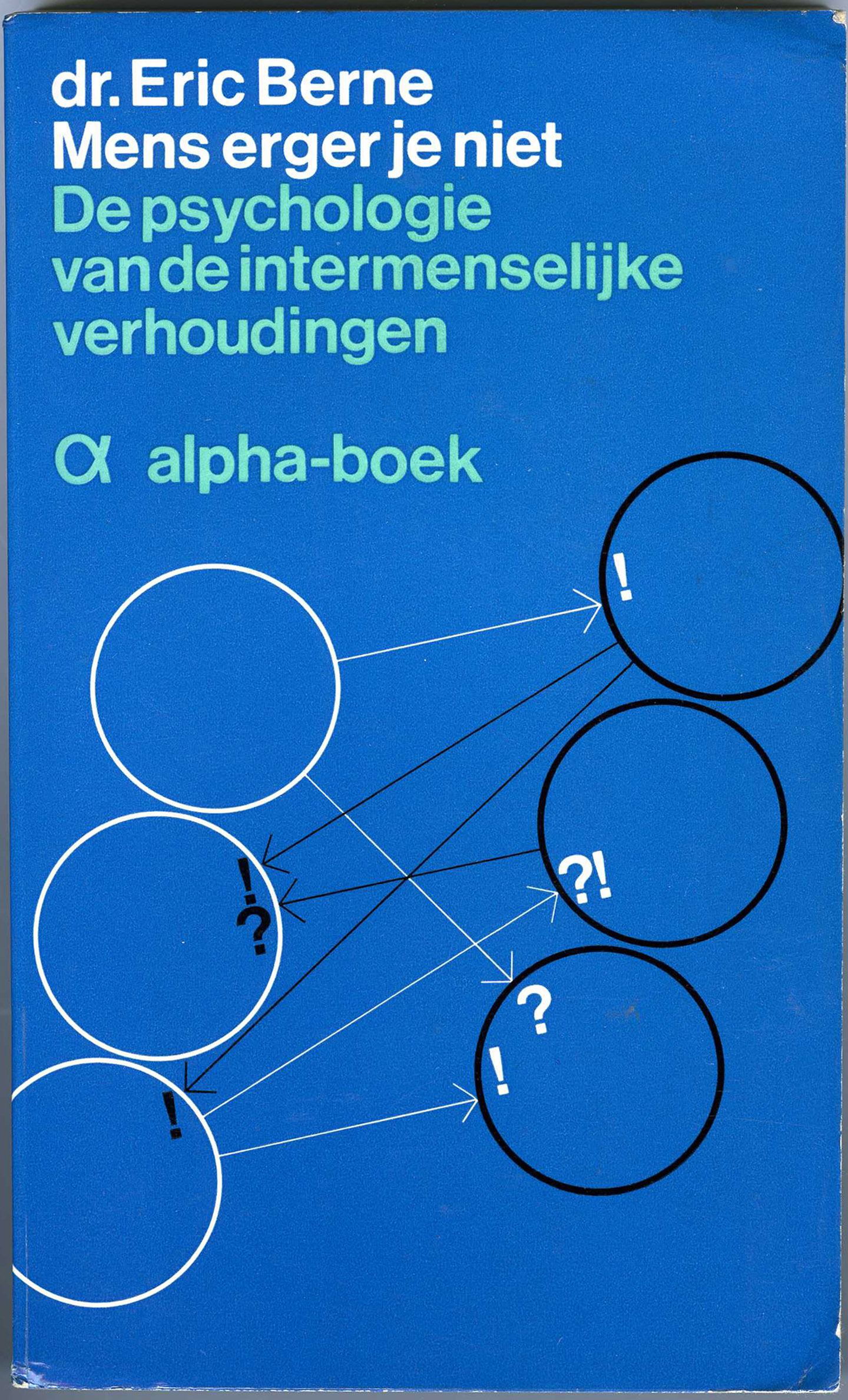
Cover of Dutch edition of Games People Play (Mens erger je niet)

Cover of Dutch edition of Games People Play (Mens erger je niet)

The rare book collection will soon be searchable through the UCSF Library catalog, and is available to researchers in the Archives and Special Collections Reading Room.